This article contains affiliate links to Thomann, which help us keep the blog running.
Play a rhythm, record it with the push of a button, then improvise over it: that’s the promise of the looper, and it hasn’t lost any of its magic. Whether you’re practicing at home, composing, or performing solo on stage with just your guitar, it’s undoubtedly one of the pedals that opens the most doors. But you still have to choose the right one, because there’s a world of difference between a €40 mini looper and a multitrack station costing over €1,000.
In this guide, we’ll explore what a looper is used for and the main categories, followed by the key factors to consider when choosing one (recording time, tracks, stereo, MIDI synchronization, undo, quantize, etc.). Next, we’ll present our selection of 14 current loopers—ranging from mini loopers to multitrack stage loopers—before wrapping up with our tips on how to use them effectively and where to place them in your signal chain.
What is a looper pedal used for?
A looper is an audio recorder designed to be foot-controlled. You press the button once to record a phrase, and a second time to close the loop: it then begins to play in a continuous loop. You can then add new layers (this is called overdubbing), delete them, or simply play over them.
In practical terms, a looper allows you to:
- work on solos and improvisation using your own chord progressions,
- compose by layering rhythm, bass with a pitch shifter, arpeggios, and melodies,
- perform solo on stage by building a song layer by layer, in the style of Ed Sheeran or many street performers,
- create ambient textures and soundscapes that evolve slowly.
It’s also a great teaching tool: nothing reveals a setup issue better than a loop that isn’t in time. In fact, many delay pedals include a small looper function—we discussed this in our comparison of the best delay pedals—but a true looper goes much further.
The 4 Main Types of Loopers
1. Mini loopers
A single footswitch, a volume knob, and a unit the size of an overdrive pedal. You record, layer, stop (often by pressing twice), and erase (by holding down the switch). They’re simple, compact, affordable, and perfect for practicing at home or adding an occasional loop on stage. Their limitation: everything is controlled by a single foot, which takes a little getting used to.
2. Compact loopers with 2 or 3 footswitches
A dedicated stop or cancel footswitch makes all the difference in everyday use. This family of pedals often includes stereo capabilities, memory slots, a drum machine, or a second track. It’s the best compromise for most guitarists who play in a band or solo.
3. Multitrack live recording systems
Here, we’re talking about full-fledged pedalboards with multiple synchronized tracks that can be started, stopped, and mixed independently. With mic inputs, built-in effects, MIDI, and sometimes a touchscreen, they’re designed to build entire songs live (verse, chorus, bridge). These are the tools of one-man bands and singer-guitarists.
4. Creative and desktop loopers
The last category consists of loopers that don’t just reproduce your loop but transform it: changing the tempo, cutting it up, creating a magnetic-tape-style distortion… This category also includes handheld tabletop loopers, which are very popular among beatboxers and electronic musicians.
Criteria for Choosing the Right Looper
- Recording time: 5 to 12 minutes is more than enough for loops of a few measures. Stage stations can record for several hours, which is especially useful for storing a large number of loops.
- Number of tracks: A single track is enough for practice. With two or more tracks, you can play a rhythm track and a melody track separately, mute one without affecting the other, and build actual song structures.
- Stereo: essential if you’re using stereo delays or reverbs after the looper, or two amps.
- Undo/redo: Undo the last failed layer without erasing everything. A must-have, especially on stage.
- Quantize: The looper automatically aligns the start and end of your loop to the beat. This is a real help if your foot timing isn’t quite perfect yet.
- Built-in rhythms: a drum machine to sync your loops to a tempo and play along with a drum kit.
- MIDI synchronization: to sync the looper with a drum machine, a delay, or an external sequencer.
- Memory slots: Save your loops and recall them during a performance, or import audio files from a computer.
- Power supply: Some models run on batteries, while others require a dedicated power supply or several hundred milliamps. Check your power supply before purchasing; our pedalboard power supply guide will help you.
Our Selection of the Best Loopers in 2026
Mini loopers
Harley Benton Mini Looper

With over 850 reviews on Thomann, this little looper is one of the most popular entry-level options on the market. For less than €40, it offers Up to 10 minutes of recording and unlimited overdubs, with a single footswitch and a volume knob to control the loop level. It operates in mono, features true bypass, and runs on a standard 9V power supply (94 mA). User reviews praise its value for the price, noting that it takes a little practice to master the foot controls. Ideal for Try looping without breaking the bank, and it would certainly fit right in with our selection of pedals for less than €50.
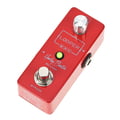
 Harley Benton Mini Looper€39Buy
TC Electronic Ditto 2

The original Ditto made mini loopers accessible to everyone, and the Ditto 2, released in 2025, adopts the same format while doubling the recording time to 10 minutes. A selector allows you to choose between the Ditto profile, which replicates the behavior of the original model, and a user profile with two new features: LoopSnap, which slightly adjusts the start and end of the loop to make it more accurate, and SingleTap, a simplified recording, playback, and stop mode. The app (Bluetooth or USB-C) handles settings and updates, and the output can operate in buffer or true bypass mode. Good to know: The original Ditto (5 minutes, undo/redo) is still available in the Thomann catalog for around €66, with nearly 2,000 reviews. For a modern and very simple mini looper, the Ditto 2 is one of the best choices available today.
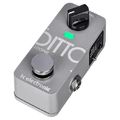
 tc electronic Ditto 2 Looper€98Buy
Boss RC-1 Loop Station

The RC-1 stands out from other mini loopers thanks to two key features: the stereo and its 24-segment circular display, which constantly shows you where you are in the loop. It’s incredibly convenient for re-triggering a layer at just the right moment. It offers 12 minutes of recording time, undo/redo, an input for an external footswitch (handy for stopping the loop without having to press the button twice), and runs on a 9V battery or AC power. With over 500 reviews and a rating of 4.6/5 on Thomann, it’s a sure bet—the perfect choice if you play in stereo or if you want to a clear view of your loop.

 Boss RC-1€105Buy
Compact loopers with 2 or 3 footswitches
Boss RC-5 Loop Station

The RC-5 is probably the most feature-rich compact looper on the market. In a format barely larger than a Boss pedal, it offers 99 memory slots, up to 13 hours of recording (1 hour and 30 minutes per phrase), stereo, undo/redo, and reverse playback. Its screen makes it easy to navigate through the memory banks, and its drum machine offers 57 beats with A/B variations and 7 kits. MIDI (mini-jack input and output) lets you sync it, and USB is used to save or import loops in WAV format. Add an external footswitch to stop or switch between presets with your foot, and you have The ultimate versatile looper for both home and stage.
 Boss RC-5 Loop Station€205Buy
Electro-Harmonix 720 Stereo Looper

As its name suggests, the 720 offers 720 seconds, or 12 minutes of stereo recording, spread across 10 independent loops that are stored in memory. It adds two very popular buttons: Reverse to play the loop in reverse, and ½ Speed to play it twice as slow, an octave lower. Its second footswitch can stop playback or trigger these effects, and a jack allows you to connect a three-button controller to switch banks or directly access undo/redo. It runs on a 9V battery or the included power supply and draws only 75 mA. An excellent alternative to the RC-5 for those who like to twist their curls.
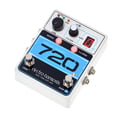
 Electro Harmonix 720 Stereo Looper€135Buy
TC Electronic Ditto X4

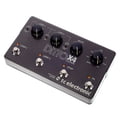
The Ditto X4 takes the Ditto concept a step further with two independent loops—which can be used separately or in sync—each with its own volume control. Its four footswitches also provide access to seven loop effects and Loop Decay mode, which gradually fades out older layers. It offers 5 minutes of recording time, undo/redo, stereo, and MIDI synchronization, with a 9V power supply included. Some users wish it had quantization and find it takes up too much space on the pedalboard, but it’s an affordable entry point into two-track looping.
 tc electronic Ditto X4 Looper€163Buy
Sheeran Loopers Looper+

The Looper+ is the compact model from Sheeran Loopers, the brand associated with the British singer. With its two aluminum pedals and its color display, it supports up to two tracks and four operating modes (Single, Multi, Sync, and Song), and stores over 3 hours of audio—up to 128 loops. Its connectivity is designed for singer-guitarists: XLR/jack combo input, microphone input, stereo outputs which can be split into a loop and a direct signal. It even runs on 4 AA batteries (over 6 hours, according to the manufacturer) or via USB, and syncs to a MIDI clock. A smart choice for the street musician or the singer who performs alone.

 Sheeran Loopers Looper +€259Buy
Multitrack live performance stations
Boss RC-500 Loop Station

The RC-500 is the RC-5’s big brother and Boss’s entry-level multitrack recorder. It offers two stereo tracks, 99 memory slots, 13 hours of recording time, undo/redo, and 57 rhythms with 16 drum kits. Its three footswitches (Rec/Play, Stop, and track selection) make managing the two loops very intuitive, and an XLR mic input with phantom power allows you to connect a vocal mic. MIDI, USB, and inputs for footswitches or an expression pedal—it has everything you need. It can even run on 4 AA batteries. For many guitarists, it offers the best balance of features and compact size on the market.
 Boss RC-500 Loop Station€288Buy
Boss RC-600 Loop Station

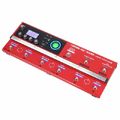
The RC-600 is the gold standard for foot-controlled live loopers. It features six synchronized stereo tracks, nine assignable footswitches, two XLR microphone inputs with phantom power, and two instrument inputs, with main and auxiliary outputs for routing certain tracks elsewhere. In terms of sound, it offers 49 input effects and 53 track effects, four of which can be used simultaneously, as well as 200 rhythms and 16 kits. The time-based effects sync to the loop’s tempo, and MIDI can be used to control everything else. Note: It only works with the included power supply and weighs 2.4 kg. It’s the go-to instrument for one-man bands and singer-guitarists who want to build entire songs live.
 Boss RC-600 Loop Station€468Buy
Singular Sound Aeros Loop Studio Gold Edition

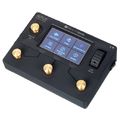
The Aeros was designed around a simple idea: structure a piece like a real song, with up to 6 parts (verse, chorus, bridge, etc.) and 6 stereo tracks—that’s 36 loops per song. Its 4.3-inch touchscreen displays the waveforms for each track, and the Gold Edition adds silent footswitches and a mixer mode. It offers undo/redo, automatic quantization, and highly advanced MIDI synchronization, particularly with the BeatBuddy drum machine from the same brand. Recording time is up to 1 hour and 30 minutes in stereo to internal memory, and much longer with an SD card. It’s The choice of those who play with a programmed drum kit and want to navigate their tracks with their feet.
 Singular Sound Aeros Gold Edition Loop Studio€609Buy
Sheeran Loopers Looper X

The Looper X is the flagship model of Sheeran Loopers. It features four stereo tracks, eight aluminum pedals with RGB LEDs, and a 7-inch touchscreen. Four XLR/jack combo inputs with phantom power, balanced XLR outputs, full MIDI functionality, and over 7 hours of internal storage: it’s a compact live performance console. It also features a HeadRush effects engine, automatic tempo detection, and functions such as Peel, Reverse, and Fade. Its price puts it out of reach for most solo artists who tour regularly, but it’s currently one of the most ambitious loopers on the market.
 Sheeran Loopers Looper X€1,129Buy
Electro-Harmonix 95000 Performance Loop Laboratory

The 95000 is a landmark in multitrack looping: six mono tracks plus one stereo mixdown track, up to 375 minutes of recording and 100 loops on a microSD card, quantized or free-form modes, track-by-track undo/redo, and MIDI clock synchronization. Its metal enclosure can be placed on a table or on the floor and is foot-controlled. There is some bad news, however: Electro-Harmonix listed it among its discontinued products in 2026 and it’s no longer listed at Thomann. If you can find one that’s on clearance or used, it’s still a formidable machine for Style your curls in layers and blend them just like in a studio, but if you’re buying new, you’re better off going with the RC-600 or the Aeros.
Creative and Desktop Loopers
Boss RC-505 MKII

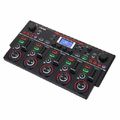
The RC-505 MKII is the go-to desktop looper, highly popular among beatboxers. It offers five stereo tracks, each with its own fader and controls, 49 input effects, 53 track effects, over 200 rhythms, and 16 kits. Its two XLR microphone inputs and two line inputs allow you to connect vocals, guitar, and keyboard at the same time, and the USB port serves as both an audio and MIDI interface. For a guitarist, it allows you to keep your hands free or to add footswitches via its two control jacks. It’s the ideal playground for musicians who blend guitar, vocals, and electronic production.
 Boss RC-505 MKII€494Buy
Chase Bliss Blooper

The Blooper is a looper like no other: here, the loop is just a starting point. Its modifiers (two of which can be used at a time out of twelve: smooth speed change, slicing, filter, stutter, pitch, etc.) transform the loop in real time, and an additive recording mode lets you save the result as a new layer. The setting Stability It adds tape-style glitches, and features 8 levels of undo/redo, 16 saved loops, MIDI, and CV. It operates in mono, powered by 9 V (approximately 150 mA). It is not currently available at Thomann as of this writing, but for fans of ambient and experimental music, he’s one of our little favorites.
How to Use Your Looper Effectively: Our Tips
1. Work on your foot timing
This is the most important point. The loop closes at the exact moment you press the button: press too early or too late, and the loop will “stutter.” Press on the first beat of the next measure, not at the end of the last note. Practice with a metronome or the looper’s drum machine, and start with 2- or 4-measure loops. Quantize or LoopSnap features can help, but they’re no substitute for good timing.
2. Build your layers methodically
Start with the rhythmic foundation (muted chords, bass with a pitch shifter, string percussion), then add parts that are progressively higher-pitched and lighter. Fewer layers, but well-chosen ones: beyond three or four, the sound quickly becomes muddled. Remember to leave room for what you’ll play on top.
3. Monitor the volume
Each overdub builds on the previous one, and the volume rises quickly. Play the subsequent layers a little softer, and set the loop volume slightly below your live playing so that your solos stand out. Also make sure the level when the pedal is off is the same as when it’s on.
4. Keep the undo pedal within easy reach
On stage, everyone makes a mistake at some point. A looper with a dedicated undo footswitch—or an external footswitch assigned to that function—will save the day. On models with a single footswitch, practice holding down the switch until it becomes second nature.
5. Prepare your loops in advance
Memory loopers let you pre-record loops or rhythms and recall them during a performance. This is a handy way to ensure a smooth set—as long as you’re transparent with the audience about what’s being played live.
Where should you place the looper in your effects chain?
In the vast majority of cases, the looper is placed at the end of the signal chain, after all your pedals. This way, it records your full sound—effects and all—and you can switch sounds (go from clean to overdrive) to play over the loop without altering it.
Before or after the delay and reverb? When placed after them, the looper records the repeats and the reverb: the loop sounds rich, but the delay tails are cut off abruptly at the loop point. When placed before, the loop is dry and then passes through your effects, resulting in a more consistent sound and smoother transitions, but any changes to the delay also apply to the loop. Many guitarists prefer to place the looper right before the delay and reverb for these reasons. To learn more, check out our guide on how to properly set up your pedalboard.
What about with a overdriven amp? If you’re using your amp’s distortion, plug the looper into the amp’s effects loop. Otherwise, the signal will go through the overdriven preamp, and you won’t be able to play clean over it. If you’re managing multiple effects loops or a large number of pedals, a pedalboard switcher makes wiring much simpler.
Finally, if you’re mixing guitar and vocals—or multiple instruments—a looper with multiple inputs (RC-600, Looper X, Looper+) or a small signal-mixing pedal connected upstream will save you a lot of hassle.
FAQ: How to Choose the Right Looper Pedal
What’s the best looper for beginners?
A mini looper with a footswitch, such as the Harley Benton Mini Looper, the TC Electronic Ditto 2, or the Boss RC-1. They’re simple, compact, and more than enough for practicing and composing at home.
How much recording time do you need?
For loops of just a few measures, 5 minutes is more than enough. Recording times of several hours are mainly useful for storing a large number of loops in memory.
Is a multitrack looper really useful?
Yes, if you’re performing solo on stage or composing structured songs: multiple tracks let you mute the rhythm section without losing the melody and seamlessly transition between verses and choruses. For practice, one track is enough.
Do you need a stereo looper?
Only if you’re playing in stereo, with two amps or stereo effects placed after the looper. In mono, a stereo looper works just fine.
What is quantize on a looper?
It’s a feature that automatically aligns the start and end of the loop with the beat or tempo. It corrects for slight variations in when you press the footswitch.
Where should you plug in a looper with a overdriven tube amp?
In the amp’s effects loop, between the preamp and the power amp. That way, the loop isn’t overdriven, and you can switch channels while playing over it.
Can you plug a microphone into a looper?
Yes, on models equipped with an XLR input, such as the Boss RC-500, RC-600, RC-505 MKII, or Sheeran Loopers. Mini loopers only accept an instrument signal.
Is a delay with a looper function enough?
For one-off loops, yes. But these functions are generally limited in duration and options (no memory slots, few undo options). A dedicated looper is still more convenient once you start using it regularly.