This article contains affiliate links to Thomann; this helps us keep the blog running.
It’s the pedal everyone has seen on pros’ pedalboards without really knowing what it’s for. A compressor doesn’t radically change your sound like a fuzz or a delay does. It works more subtly, affecting the dynamics, sustain, and how your guitar sits in the mix. And once you’ve tried it, it’s hard to go back.
In fact, 2026 was a particularly eventful year for this effect: new optical compressors, anniversary editions of iconic models, miniaturized studio circuits… In this guide, we’ll explore how a compressor works, the different technologies available (OTA, VCA, optical, FET), and our selection of 14 top-tier compression pedals—ranging from budget-friendly to high-end—before wrapping up with settings and placement on the pedalboard.
What is a compression pedal used for?
A compressor reduces the difference between loud and soft notes. Specifically, it lowers volume peaks above a certain threshold and then raises the overall level. The result is a more consistent, fuller sound in which every note is audible.
In particular, it allows you to:
- extend the sustain of notes and chords,
- add punch and consistency to the rhythms with a clean tone,
- achieve that famous percussive “squash” sound found in country, funk, or chicken picking,
- better integrate the guitar into a mix, both live and in the studio.
If you’re new to this effect, check out our article “An Introduction to Compression Pedals” covers the basics in detail.
The 4 Major Compressor Technologies
Before comparing models, there’s one thing you need to understand: two compressors set up the same way can sound very different depending on their circuitry. It’s often this factor—more than the brand—that will make the difference in your playing.
1. OTA Compressors
This is the classic compression pedal technology, popularized by the MXR Dyna Comp and the Ross compressor in the 1970s. The compression is crisp and colorful, with that very recognizable “clicky” and percussive quality. Ideal for country, funk, and vintage sounds.
2. VCA Compressors
Derived from studio consoles, VCA circuits are fast, precise, and low-noise. They provide more transparent compression and offer greater control (attack, release, ratio). An excellent choice for an always-on compressor that doesn’t color the sound.
3. Optical Compressors
Here, a small lamp and a photosensitive cell control the compression. The response is slower and smoother, resulting in a very musical compression that “breathes” and allows the chords to unfold. Perfect for clean tones, arpeggios, and chord playing.
4. FET Compressors
Inspired by the legendary 1176 studio limiter, FET compressors are renowned for their extremely fast attack and lively character. They add bite and presence, and can handle very aggressive settings without breaking down.
Good to know: Many modern models offer a Blend (or Mix, Dry) control, which mixes the compressed signal with the original signal. This is the famous parallel compression used in studios: you retain the natural attack of your notes while still benefiting from sustain. It’s a real plus, which we highlight for each pedal.
Our Selection of the Best Compression Pedals in 2026
Affordable Compressors
Harley Benton Dynamic Compressor

For around 30 euros, it’s hard to find a better way to get started with compression. The Harley Benton Dynamic Compressor follows the formula of classic analog compressors with three simple controls: Sustain, Attack, and Level. The sound obviously doesn’t have the finesse of high-end models, but it works very well on clean rhythm parts or for adding a bit of sustain to solos. It’s the ideal entry point before investing more, and it was already included in our selection of pedals under €50.
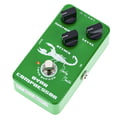
 Harley Benton Dynamic Compressor30 €Buy
Mooer Yellow Comp

The Yellow Comp is one of the few affordable optical compressors. In its compact housing, which takes up very little space on the pedalboard, it offers smooth, natural compression with three controls: Volume, EQ, and Comp. The EQ control is very handy for restoring a bit of brightness to the sound when you crank up the compression. A great option for an “always-on” compressor for clean tones without breaking the bank.
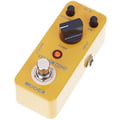
 Mooer Yellow Comp€62Buy
The Great Classics
MXR Dyna Comp

You can’t talk about compression without mentioning the Dyna Comp. This little red box has been on pedalboards since the ’70s, and it defined the sound of the OTA compressor: crisp, percussive compression with that characteristic “click.” With just two controls (Output and Sensitivity), it gets right to the point. It’s the ideal pedal for country, funk, and anyone who wants compression that you can actually hear—not a transparent tool.
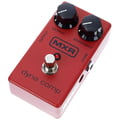
 MXR Dyna comp 1976109 €Buy
Boss CS-3 Compression Sustainer

In continuous production since 1986, the CS-3 is the other classic. It offers four controls (Level, Tone, Attack, Sustain), making it more versatile than the Dyna Comp. The Tone control is invaluable: it allows you to preserve the high frequencies as you increase the compression, whereas many compressors tend to muffle the sound. Sturdy, low-noise, and easy to find used, it’s a sure bet for both getting started and playing live.
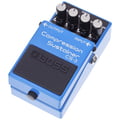
 Boss CS-3 Compression Sustainer109 €Buy
Xotic SP Compressor

The SP Compressor incorporates the OTA technology of the legendary Ross compressor—highly sought-after on the used market—into a mini enclosure. It stands out for its “Blend” control, which lets you adjust the amount of parallel compression, a three-position compression level selector, and up to +15 dB of boost. Internal DIP switches even let you adjust the attack. The sound is warm and full, with a very pleasant, slightly vintage character. It’s one of the most popular compression pedals of recent years—and for good reason.
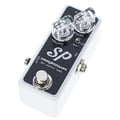
 Xotic SP Compressor175 €Buy
Wampler Ego Compressor

The Ego has become a modern standard, to the point that many consider it the benchmark for affordable “boutique” compressors. With its five controls (Volume, Sustain, Attack, Tone, Blend), it covers the entire spectrum: from transparent compression that you can leave on all the time to the pronounced squash of chicken picking. The Blend control lets you preserve the attack of your notes, making it an excellent partner for your overdrive pedals as well. It accepts both 9 V and 18 V power for more headroom.
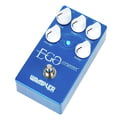
 Wampler Ego Compressor185 €Buy
Keeley Compressor Plus Germanium

A standout new release for 2026, this anniversary edition celebrates Keeley’s 25th anniversary—a brand born… from a compressor. It features the same controls as the best-selling Compressor Plus (Level, Tone, Comp, and Blend, plus a single-coil/humbucker selector switch), but incorporates a germanium transistor used as a buffer and tone-shaping stage. The goal isn’t to add distortion: the germanium softens harsh highs, adds flexibility to the sustain, and makes the pedal more responsive to touch. It operates from 9 to 18 V and offers a choice of true bypass or buffered bypass. If you’ve been hesitating to switch to Keeley, this is undoubtedly the best version to date.
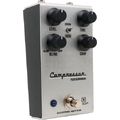
 Keeley Compressor Plus Germanium215 €Buy
Optical Compressors
Diamond Guitar Compressor EQ

Made in Canada, the Diamond is a benchmark among fans of optical compression. It combines a highly musical optical circuit with a tilt EQ—which lets you shift the sound toward a rounder or brighter tone with a single knob—and a midrange control. A two-position attack selector rounds out the package. The compression is smooth and full-bodied, giving the genuine sensation of an amp that “responds” better. Highly regarded by pop, soul, and indie guitarists, it also boasts a perfect rating from Thomann customers.
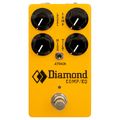
 Diamond Guitar Compressor EQ269 €Buy
Walrus Audio Highpoint

Set to be released in April 2026, the Highpoint is undoubtedly the most ambitious compressor of the year. This fully analog optical compressor joins Walrus Audio’s high-end Monarch series and features all the controls you’d expect from a studio compressor: Threshold, Ratio, Attack, Release, Makeup Gain, and Blend for parallel compression. It operates internally at ±15 V for massive headroom, features a high-pass filter on the sidechain (to prevent low frequencies from causing the compression to “pump”), and displays the gain reduction on an LED VU meter. It isn’t yet listed on Thomann at the time of this writing, but it clearly deserves a spot in this selection.
Studio Compressors (VCA and FET)
Orange King Comp

Orange is entering the compression market with the King Comp, a Class A VCA compressor designed for both guitar and bass. It features four controls (Volume, Compression, Attack, Release) and operates at 18 V for maximum headroom, using the included power supply—a nice touch. The LED changes color when compression is active, providing a handy visual cue. A precise, quiet, and easy-to-use compressor, offered at a very reasonable price for a circuit of this quality.
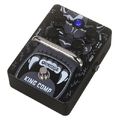
 Orange King Comp169 €Buy
Empress Effects Compressor MKII

The Empress Compressor MKII is often cited as the most feature-rich compressor in the pedal format. It features Input, Output, Attack, Release, Mix, and Tone controls, a ratio selector, and a high-pass filter on the sidechain. Its LED meter lets you see exactly how the compression is working—a real luxury when fine-tuning settings. The sound is very transparent, with virtually no background noise. It’s the go-to choice for discerning guitarists who want the feel of a studio-quality compressor right at their feet.

 Empress Effects Compressor MKII Blue285 €Buy
Origin Effects Cali76 V2

Origin Effects compressors can be found on the pedalboards of countless pros, and the Cali76 is the flagship model. This analog recreation of the famous 1176, built with discrete Class A circuitry, offers all the controls of the original (Input, Ratio, Attack, Release, Output) plus a Dry control for parallel compression. The V2 adds a 10-LED gain reduction display and increased internal voltage for even more headroom. The sound is lively and punchy, with that characteristic FET bite that makes every note stand out. It’s an investment, but it’s probably the last compressor you’ll ever buy.

 Origin Effects Cali76 V2 FET Compressor344 €Buy
Universal Audio UAFX 1176 Studio Compressor

Want the sound of the 1176 without the price tag of a Cali76? Universal Audio, the brand behind the 1176, offers a very convincing digital emulation. Three modes (Single, Dual, and Sustain) cover transparent compression, dual compression, and infinite sustain for solos, with a parallel compression setting. At this price, it’s one of the best values on the market for studio-grade compression. Just be mindful of the power supply: it requires at least 250 mA.
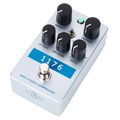
 Universal Audio UAFX 1176 Studio Compressor139 €Buy
The Hybrid Compressor
Strymon Compadre

As is often the case with Strymon, the Compadre goes a step further than the competition. It combines an analog VCA compressor with two voicings (“Studio” for gentle compression and “Squeeze” for a more pronounced effect) and a clean or dirty boost with three EQ options, each of which can be activated separately via footswitch. A Dry setting enables parallel compression. It’s the perfect pedal for anyone who wants always-on compression and a solo boost in a single unit, with the brand’s impeccable build quality (yes, we have a soft spot for Strymon here at GuitarEffect).
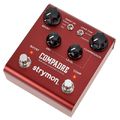
 Strymon Compadre319 €Buy
How do you properly adjust your compressor?
The compressor is the effect that people most often set incorrectly, simply because it’s not very noticeable. Here are a few tips to get you started:
1. In “always-on” mode, to make the sound richer
This is the most common use. The goal isn’t to hear the effect, but to feel that the sound is denser and more consistent when you release the pedal.
- Compression / Low Sustain
- A fairly slow attack, to let the pick strike through
- Set the blend to around 50% if your pedal has one
- Volume adjusted to match the level when the pedal is disengaged
2. For country and funk squash
Here, we want to hear the compression. We significantly increase the sustain, choose a fast attack, and set the Blend knob toward the compressed side. OTA compressors like the Dyna Comp or the Xotic SP excel at this.
3. For sustain during a solo
High compression, slow release, and a little extra volume to cut through. When paired with an overdrive, the compressor lets you hold notes much longer. We discuss this in more detail in our article “How to Manage Sustain on Your Pedalboard?”.
Where should you place the compressor on your pedalboard?
In the vast majority of cases, the compressor is placed at the beginning of the signal chain: after the tuner and the wah pedal, but before the overdrive pedals. This evens out the signal feeding your overdrives, making them sound more consistent. When placed after a distortion pedal, it also compresses the hum and can bring out background noise.
Some guitarists place a transparent compressor at the end of the signal chain—just as you would on a mixing console—to “tie together” the overall sound. This is a less common approach, typically reserved for very clean VCA or FET compressors. To learn everything about pedal order, check out our comprehensive guide to pedalboard setup.
Finally, keep power in mind: several models in this selection require 18 V or a high current draw (up to 250 mA). If you need to buy some equipment, our selection of the best pedalboard power supplies will help you choose.
FAQ: How to Choose the Right Compression Pedal
What is the best guitar compressor pedal?
There isn’t a single “best” pedal—it all depends on how you plan to use it. For pronounced, vintage-style compression, the MXR Dyna Comp or the Xotic SP are go-to choices. For a versatile and transparent compressor, the Wampler Ego or the Keeley Compressor Plus Germanium are excellent choices. And for studio-quality sound, the Origin Effects Cali76 or the Empress Compressor MKII are at the top of the list.
Do you really need a compressor when you’re just starting out?
It’s not the first pedal you should buy, but it’s often the one that improves your overall sound the most. A simple model like the Boss CS-3 or the Mooer Yellow Comp lets you get a feel for the effect without a big investment.
What is the difference between an optical compressor and a VCA compressor?
The optical compressor responds more slowly and smoothly, producing a very natural and musical sound. The VCA is faster, more precise, and more transparent, with more adjustment options. The optical compressor is often preferred for clean tones and chords, while the VCA is used for fine-tuning dynamics.
What is the Blend control on a compressor used for?
The Blend (or Mix, Dry) mixes the compressed signal with the original signal. This parallel compression preserves the natural attack of the notes while taking advantage of the sustain and density provided by the compression.
Can a compressor replace a boost?
To some extent: most compressors allow you to increase the volume and thus act as a mild boost. Some models, such as the Strymon Compadre, even include a separate, dedicated boost circuit. But a compressor also alters the dynamics, which a boost does not.
Does a compressor make noise?
When boosting weak passages, a compressor also boosts the hiss from your system, especially at high settings. High-quality VCA and FET circuits (Empress, Cali76, King Comp) are known for being particularly quiet.
Which compressor should I use for bass?
Most of the pedals in this selection work very well with bass, especially the Orange King Comp, which is designed for both instruments. There are also dedicated models available from Origin Effects, Empress, and Keeley. Check out our recommendations in our guide to the best bass pedals.
Where should the compressor be placed in relation to the wah and overdrive pedals?
Most often, after the wah and before the overdrives, distortions, and fuzz pedals. One exception: some vintage fuzz pedals don’t like having a compressor before them, so it’s best to try both orders.