It’s hard to tell the difference between volume pedals and expression pedals, which often look very similar. Same format, same foot movement, same “sweep” use… and yet they don’t do the same thing at all.
In this guide, we’ll:
✔ clearly understand the difference between volume and expression
✔ know which one to choose depending on your setup
✔ discover a selection of the best pedals on the market in each category
Volume vs. Expression: the difference explained simply
Volume pedal = acts on the audio signal
It is placed directly in the guitar → pedals → amp chain. The sound passes through it.
It is used to :
– lower/increase overall level
– make violin-style swells
– cut sound completely (kill switch)
– manage live dynamics This is literally a foot-controlled volume potentiometer.
Expression pedal = controls a parameter
It carries no audio signal. It is connected to the “EXP” or “Expression” input of another pedal (delay, multi-effects, reverb, modulations, etc.).
It is used to :
– control the mix of a delay
– vary a tremolo speed
– drive a digital wah
– manage several parameters of a multi-effects unit
So it’s a remote controller, not a volume attenuator.
So, to summarize:
Volume = modifies the sound directly
Expression = controls an external parameter
Some pedals can also do both (but this is not a general rule)!
Our selection of the 5 best volume pedals
Walrus Audio Canvas Volume Pedal

The Canvas Volume is a state-of-the-art volume pedal built around a non-contact position sensor and analog VCAs for ultra-precise control without mechanical wear. It offers an all-analog signal path, while providing numerous customization options such as eight tap curves inspired by classic pedals, minimum volume control, gain control up to +9 dB and a lag function to smooth volume transitions. Thanks to its mono and stereo inputs/outputs and a tuner output, it can be integrated into both simple pedalboards and more complex setups.
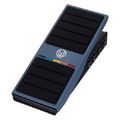
 Walrus Audio Canvas Volume Pedal329 €Buy
Boss FV-500H Volume

Similar to the FV-500L version, but optimized for high impedance, making it ideal for guitars with many effects or tube amps. It shares the same Boss sturdiness and smooth action underfoot, with ergonomics designed to handle fine dynamics and volume changes in the blink of an eye. Very versatile and always recommended in comparisons.
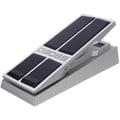
 Boss FV-500-H115 €Buy
Dunlop DVP4 Volume Mini

A compact yet powerful model, ideal for pedalboards where space is at a premium. Despite its small size, this Dunlop pedal offers smooth, precise volume action, with the option of also using it as an expression pedal depending on your setup (possible depending on wiring / not a true dedicated expression output). Its impedance and design minimize tone loss while remaining highly ergonomic.
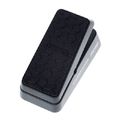
 Dunlop Volume X Mini Pedal DVP4143 €Buy
Xotic XVP-250k Volume Pedal

The Xotic XVP-250k is often praised for its balance of performance, size and premium design. It offers ergonomic pedal travel, a very natural response and a quality potentiometer that guarantees finely controlled swells without “jumps” in the sound. Its medium format makes it suitable for most pedalboards while remaining practical to play.
Ernie Ball VP Jr 250K

A timeless classic for guitarists of all levels, the Ernie Ball VP Jr 250K offers smooth response and precise volume control throughout. Its simple yet robust design makes it a sure bet on stage and in the studio, with a natural feel underfoot that’s perfect for dynamic transitions and expressive swells. Thanks to its wide variation range, it integrates easily into almost any rig – from analog setups to more complex pedalboards – without altering the signal. It’s an efficient, versatile pedal, ideal for those who want intuitive, reliable volume control without compromise.
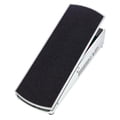
 Ernie Ball EB6180 VP-JR109 €Buy
How to choose the right volume pedal?
✔ Impedance and circuitry: some pedals are designed for high impedance (pure guitar), others for low impedance or stereo – choose according to your signal and equipment.
✔ Action and response: a larger pedal will often have a smoother, more precise stroke, while a compact one will be handy for tight boards.
✔ Live vs. studio use: if you often play live, a sturdy, stable pedal is essential.
✔ Bonus features: some pedals can also be used as expression pedals or include a tuner output.
✔ Placement in the effects chain: placed at the beginning of the chain (after the guitar), the pedal acts on the raw signal, creating very natural swells or influencing the saturation of overdrives and fuzz. Placed at the end of the chain, it becomes a global volume control or kill switch, ideal for cleanly cutting the sound or managing live transitions without altering the color of the effects.
Directions for use
Discreet boost: set your pedal slightly below max and turn up the volume for solos – a simple but effective technique without adding saturation here.
For swells and ambiences: place your pedal early enough in your effects chain (before delay/reverb) to obtain smooth rises.
Like a kill switch: use a volume pedal to quickly cut the signal between two tracks without compromising sound.
Our selection of the 5 best expression pedals
Mission Engineering EP-1

Probably the most popular expression pedal among modern multi-effects users. Its format and mechanics are clearly reminiscent of a wah, with a long, highly progressive stroke that facilitates precise live adjustments. The all-metal chassis inspires confidence and easily withstands intensive touring. Compatible with the majority of systems (Line 6, Fractal, Strymon, Eventide…), it’s an ultra-versatile safe bet, equally at home controlling volume, delay mix or preset morphing.
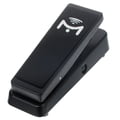
 Mission Engineering EP-1-BK SPL235 €Buy
Boss EV-30

Compact yet formidably efficient, the EV-30 is designed for modern pedalboards where every inch counts. Its strong point: 2 independent expression outputs, enabling simultaneous control of 2 pedals or 2 different parameters. You’ll find typical Boss reliability, with smooth, even travel and no mechanical play. Polarity and range settings ensure broad compatibility, making it ideal for hybrid analog/digital setups.
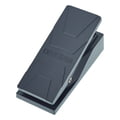 Boss EV-30111 €Buy
Dunlop DVP3 Expression/Volume
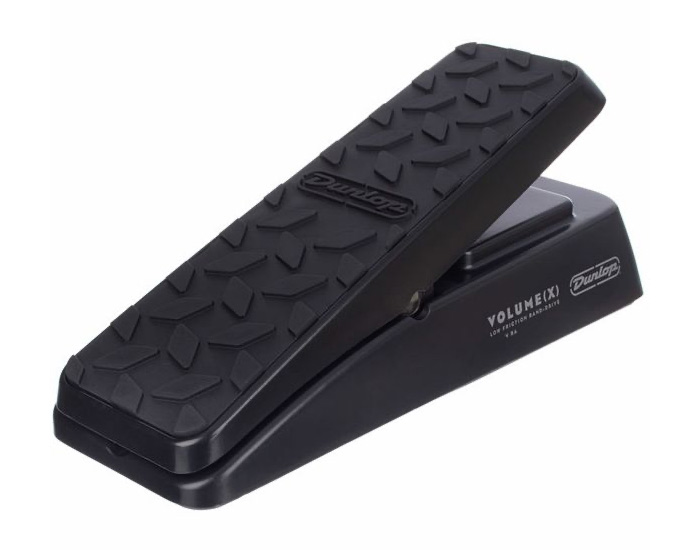
Originally a volume pedal, the DVP3 can also operate in expression mode, making it a particularly flexible option. Its large size offers a comfortable, precise stroke, great for progressive variations or subtle morphing. The aluminum construction is solid and built to last, even under heavy use. If you want a pedal capable of changing roles according to your setup, this is probably one of the best all-rounders on the market.
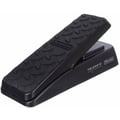 Dunlop DVP 3 Volume (X) Pedal179 €Buy
Lehle Dual Expression
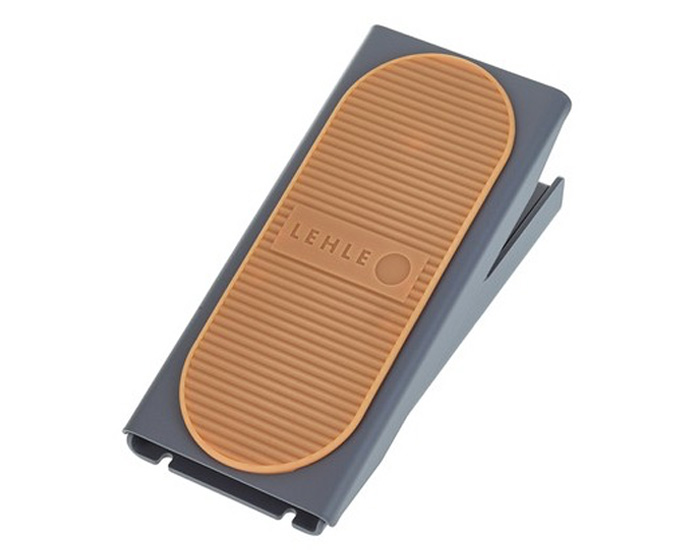
Clearly positioned at the top end of the market, Dual Expression relies on a non-contact magnetic mechanism, eliminating all mechanical wear and guaranteeing constant fluidity over time. The precision of the stroke is remarkable, ideal for very fine adjustments or complex morphing. Its two independent outputs enable you to control several parameters simultaneously, perfect for professional rigs. Quiet, ultra-durable and extremely precise, this is a pedal designed for those who want the best.
 Lehle Dual Expression219 €Buy
Hotone Soul Press II
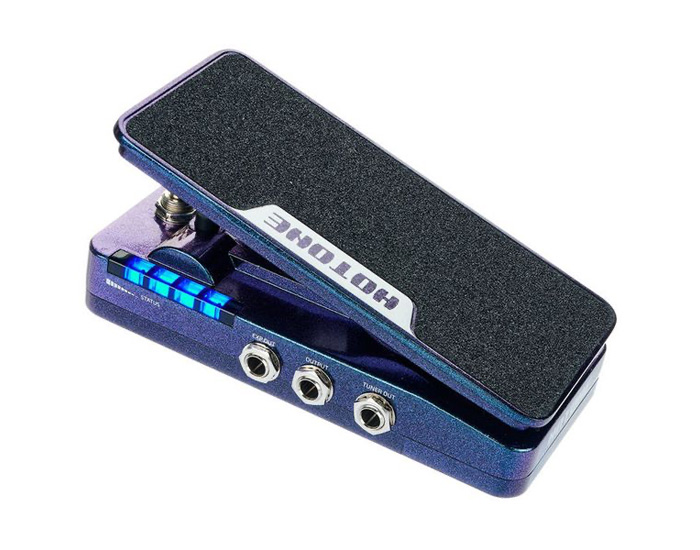
The Hotone Soul Press II is a highly versatile expression pedal that combines expression control, volume and wah-like capabilities, depending on the hardware to which it’s connected. It offers several response modes (expression, wah, volume) and polarity settings to suit a wide range of effects or digital processors. Its compact size and fluid action make it ideal for modern pedalboards, especially those equipped with multi-effects or digital units that recognize the expression signal. Please note, however, that it doesn’t contain its own internal wah – the wah function depends on the device controlled via the expression input. It’s an ideal pedal for guitarists who want a single unit capable of controlling multiple parameters depending on the context of use.
 Hotone Soul Press II109 €Buy
How to choose the right expression pedal?
✔ Compatibility (TRS / polarity): not all expression pedals wire their sockets in the same way. Check the polarity (Tip/Ring) and the potentiometer value requested by your multi-effects or pedal (10k, 25k, 50k…). Incorrect matching can result in inaccurate or unusable travel.
✔ Travel and progressivity: a long travel offers finer, more musical control (ideal for delays, reverbs or morphing), while a compact format favors saving space on the pedalboard. Choose according to your playing comfort.
✔ Solidity and mechanics: live, the pedal is under constant strain. A metal chassis, sturdy hinge and good ground stability are essential to avoid mechanical play or unintentional variations.
✔ Number of outputs: some pedals offer two expression outputs to control 2 devices or two parameters at the same time – handy for complex or stereo setups.
✔ Built-in settings: range, minimum, polarity inversion… These small adjustments allow you to adapt the pedal precisely to your equipment and obtain a more natural response.
Directions for use
Delay / reverb control: assign expression to mix or feedback to create gradual rises, ambient layers or controlled post-rock oscillations.
Morphing presets: on multi-effects (Helix, Quad Cortex, Fractal…), an expression pedal can control several parameters simultaneously: gain + volume + modulation, for example, to go from a clean verse to a saturated lead in a single movement.
Dynamic wah/filter: many digital effects incorporate expression-controlled wahs or filters. This gives you the feel of a traditional wah, without adding a dedicated floor pedal.
Live comfort management: place it close to the edge of the pedalboard for natural foot access, and remember to calibrate the stroke in your multi-effects to exploit 100% of the useful range.
FAQ – Volume and expression pedals
What’s the difference between a volume pedal and an expression pedal?
A volume pedal acts directly on the audio signal passing through it: it lowers or raises the sound level of your guitar.
An expression pedal, on the other hand, doesn’t carry sound: it sends a control signal to drive a parameter of another effect (delay, wah, reverb, multi-effects…). The two are physically similar, but function very differently.
Can a volume pedal be used as an expression pedal?
Sometimes yes, but it’s not guaranteed. Some volume pedals can work in expression with a suitable cable, but the response can be imprecise (logarithmic vs. linear curve). For smooth, reliable control, it’s best to choose a real, dedicated expression pedal.
Where to place a volume pedal in the effects chain?
At the beginning of the chain, it acts on the dynamics of the raw signal, enabling very natural swells.
At the end of the chain, it acts as a master volume or kill switch, useful for cutting the sound cleanly live. Placement depends on the desired effect.
Are all expression pedals compatible with each other?
No. Expression pedals use different potentiometer values (10k, 25k, 50k…) and TRS polarities. You need to check compatibility with your multi-effects or pedal, otherwise the travel may be reduced or reversed.
Do I really need an expression pedal?
If you’re using multi-effects or digital pedals (delay, reverb, advanced modulations), yes: it lets you control the mix, feedback, speed or even several parameters at once.
On the other hand, for a simple 100% analog setup, a volume pedal is often sufficient.